


Why Film Still Feels Different
Most of us have thousands of photos on our phones. We scroll past them and rarely look back.
Then someone hands you a printed photograph. You hold it in your hands and look at it longer. It feels different.
Film is not just a vintage look or a passing trend. It is another way of making a photograph, and you can see it in the result.
At weddings, I shoot digital for full coverage. I use film for moments where it adds something extra. I carry three film cameras:
- Canon Rebel G2 for 35mm film
- Pentax 645N for medium format film
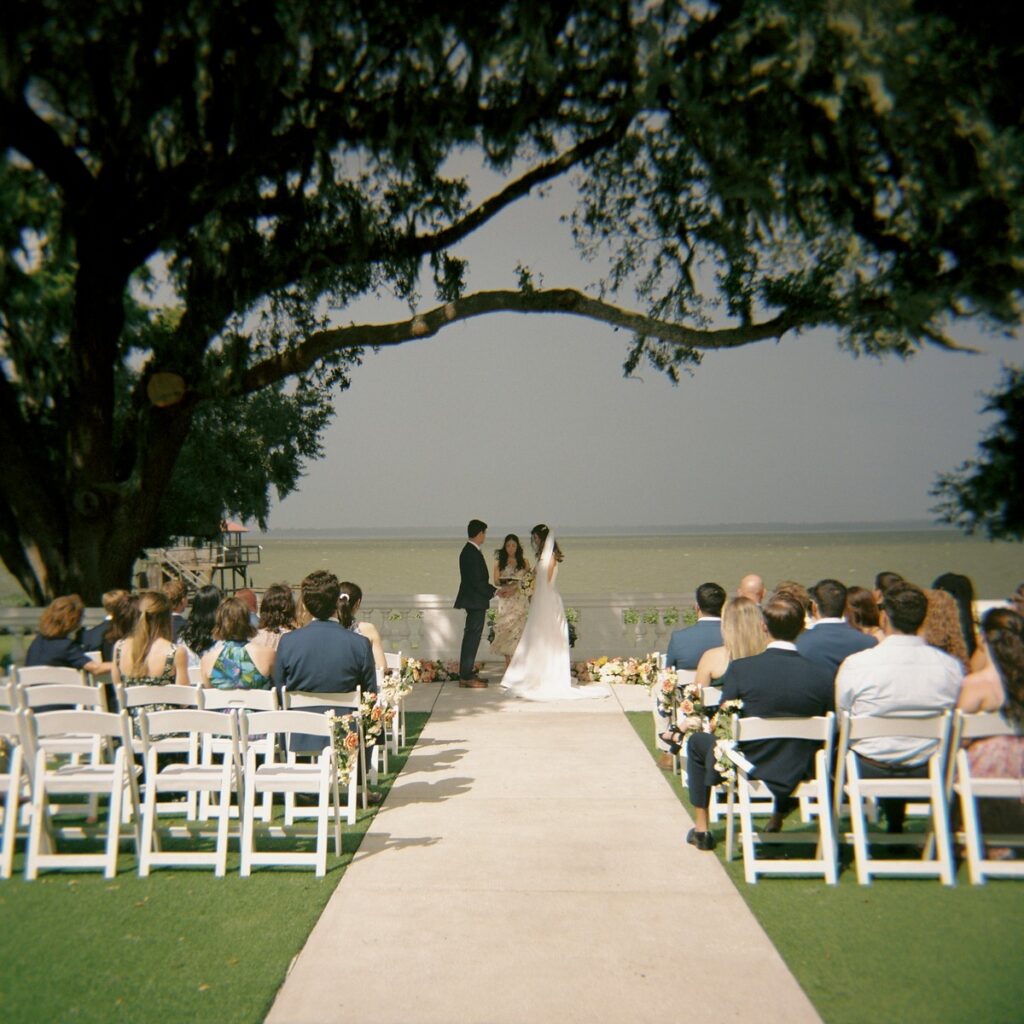
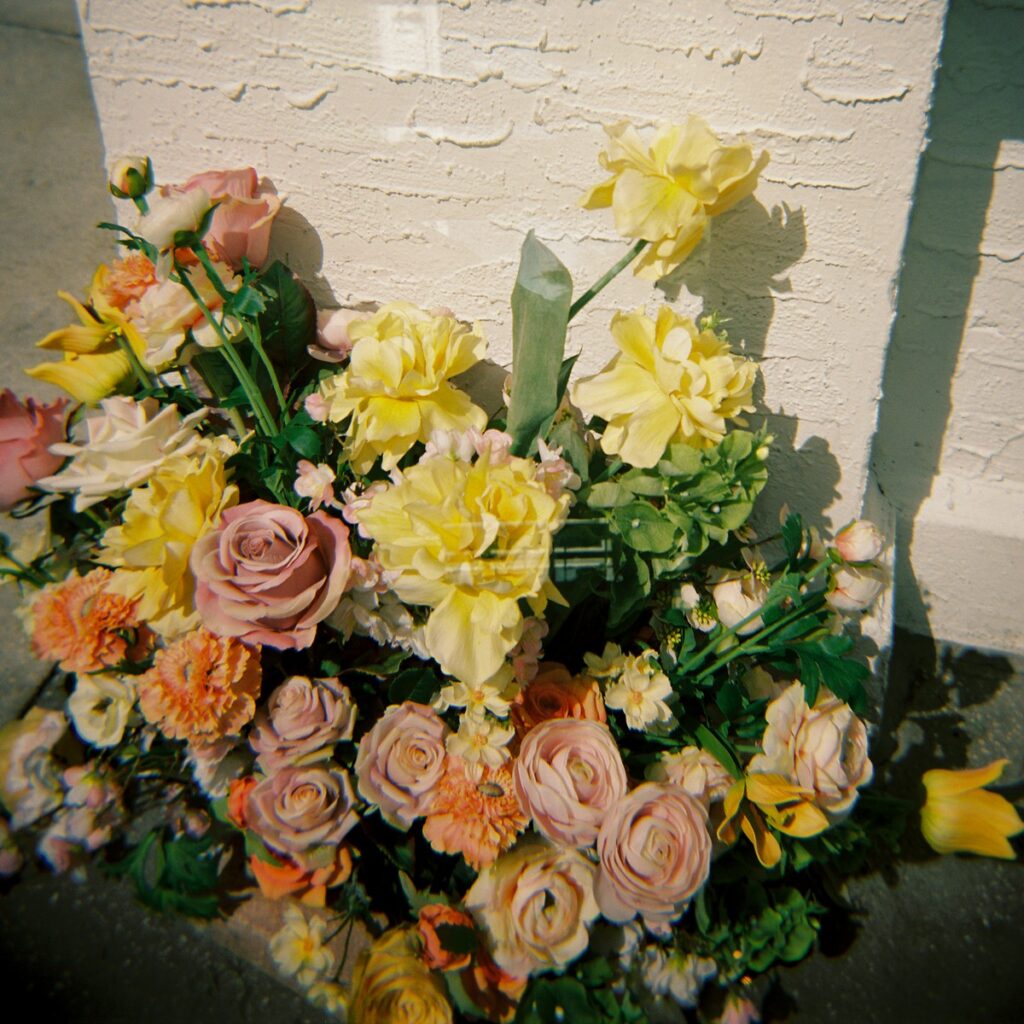
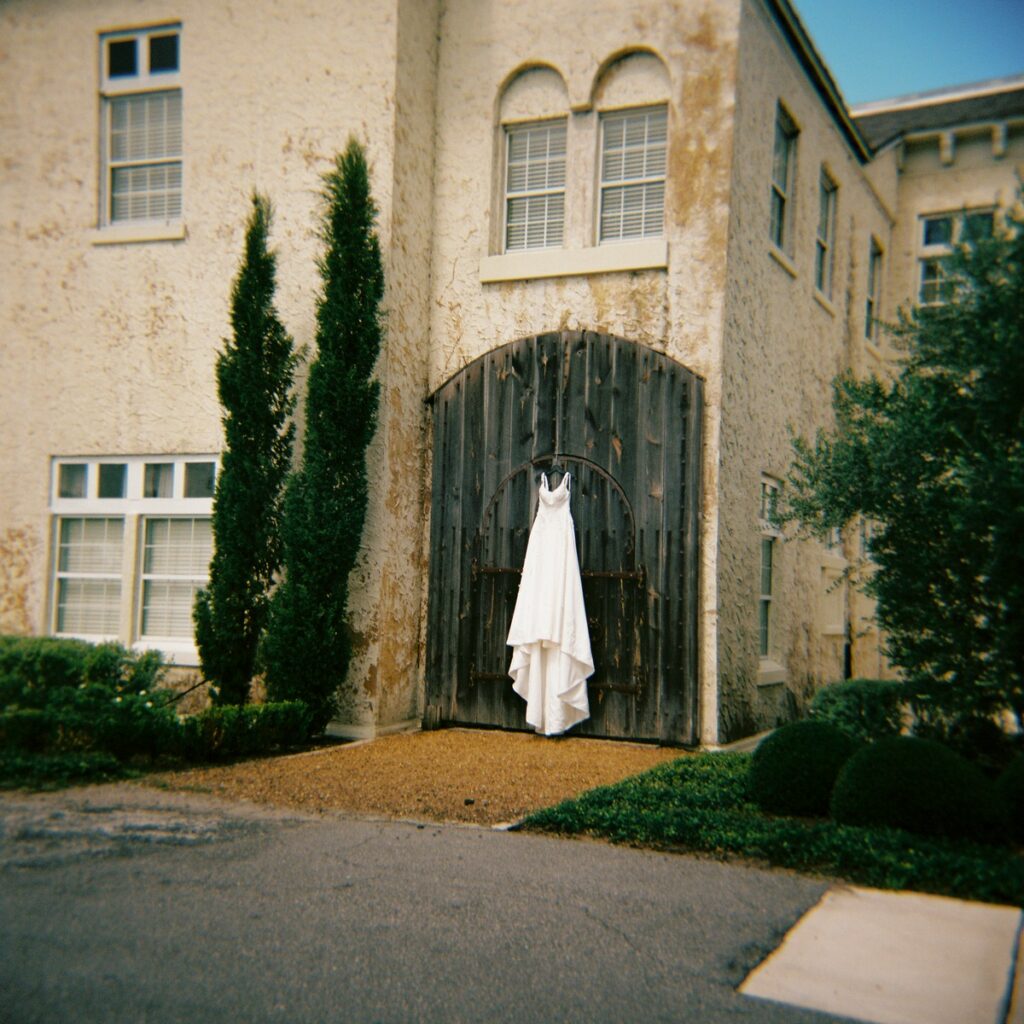
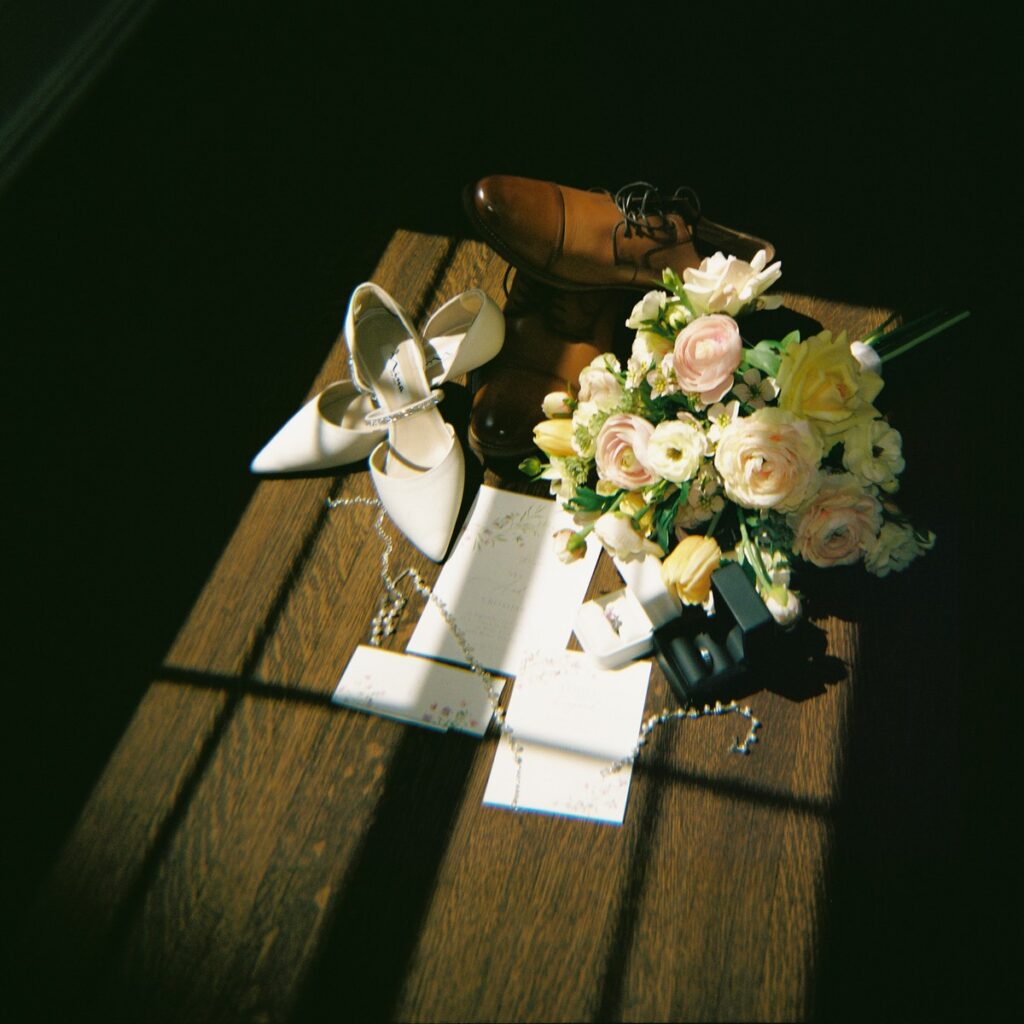
- Holga 120 for a looser, less predictable medium format look
Each camera has its own job. I will cover all three below.
The main idea is simple: film changes how a photographer sees a moment. It also changes how I move through a wedding day.
Photographer Tip: Film makes you slow down. With a limited number of frames, you think harder about what deserves a photo.
What Makes Film Photography So Special?
Ask ten photographers why they love film, and you get ten different answers. Still, a few things come up again and again.
Film Has a Different Character
Here is what people usually notice:
- Natural grain: Tiny specks of texture that add depth to a photo.
- Softer transitions: Tones blend gently from light to dark.
- Organic colors: Skin tones look warm and true to life.
- Highlight rolloff: Bright areas fade out slowly instead of turning harsh white.
- Small flaws: A bit of dust, a soft edge, or a slight color shift.
- A physical feel: Film is a real object you can hold up to the light.
You don’t need to know these terms to feel the difference. Most people just say the photo looks warm and real.
Film Doesn’t Try to Make Everything Perfect
Digital is very precise. It gives you sharp, clean, and consistent photos. That is a big plus at a wedding.
Film works differently. Each frame comes out a little different from the last. Light, color, and focus all shift a bit.
Those small changes make a photo feel more personal and alive. You can tell a real moment happened.
Photographer Tip: Some of my favorite film photographs aren’t technically perfect. They’re the ones where everything about the frame feels honest.
Film Photography vs. Digital Photography
Film is not better than digital. Digital is not better than film. They do different jobs, and they work well together.
| Digital | Film |
|---|---|
| Fast and flexible | Slow and deliberate |
| Thousands of possible frames | A limited number of exposures |
| Instant preview | No preview |
| Easy to adjust on the spot | A look all its own |
| Great for documenting everything | Encourages picking your shots |
Why You Don’t Have to Choose One
Digital lets me cover the whole wedding with confidence. I can shoot in dark rooms and check my work. I don’t miss the key moments.
Film gives me a second way to tell the story. The photos feel warmer and more hands-on. Some look like they came from an old family album.
Put them together, and you get full coverage plus a set of frames with extra feeling. You don’t have to give up anything.
Photographer Tip: I don’t shoot film because digital isn’t good enough. I shoot film because it gives me something different.
Why Film Works So Beautifully for Weddings
A wedding is packed with history. Film fits right in with that.
Weddings Are Already Full of Nostalgia
Think about what shows up on a wedding day:
- Family stories and history
- Grandparents and grandkids in the same room
- Old traditions passed down
- Handwritten letters and vows
- Heirlooms like a ring, a veil, or a watch
- Big feelings and happy tears
- Small moments that pass in seconds
Much of this already connects to the past. Film has a look that suits it. Warm color and soft grain go well with a grandmother’s pearls or a father’s letter.
The Photographs Can Feel Like Memories
A digital photo often feels like a record of what happened. It is clear, sharp, and accurate.
A film photo can feel more like a memory. The grain, color, and small flaws soften the edges. It looks less like a snapshot of an event and more like something you remember.
Photographer Insight: There’s something special about looking at a photograph that already feels like it belongs in your family album.
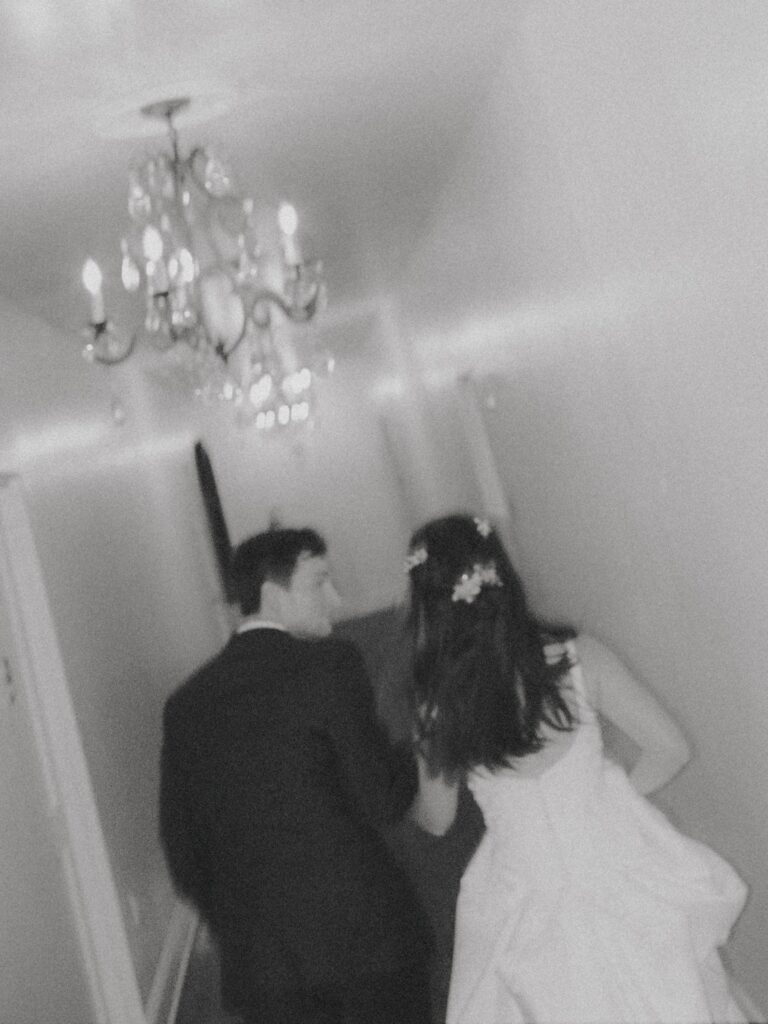
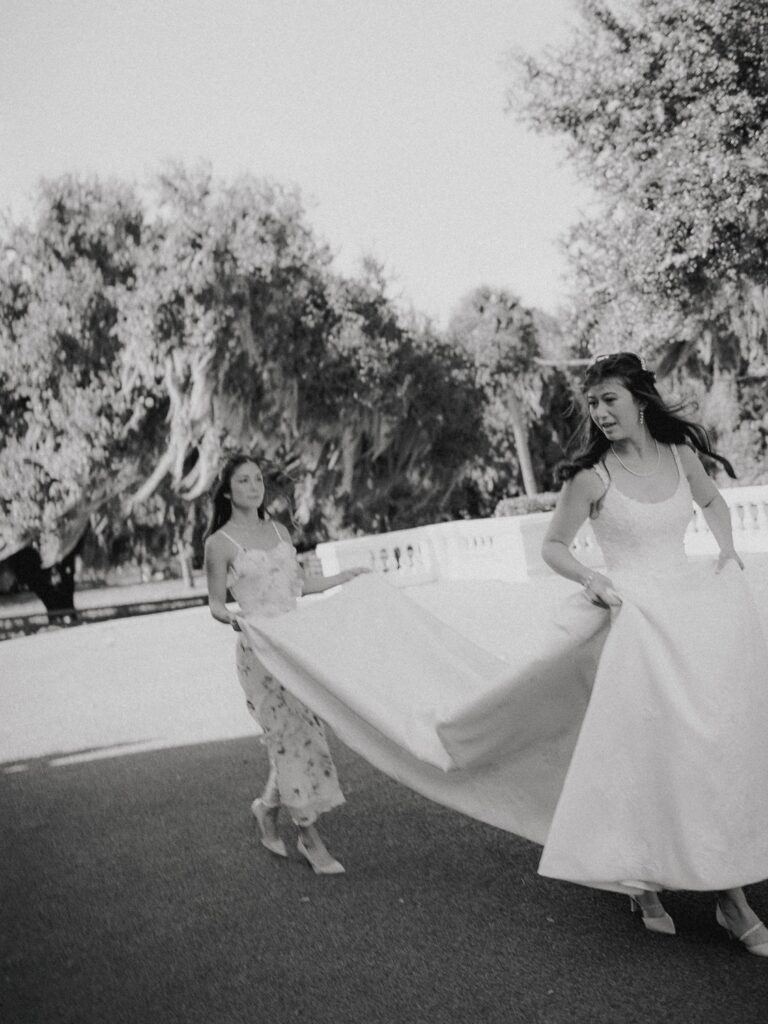
The 35mm Experience: My Canon Rebel G2
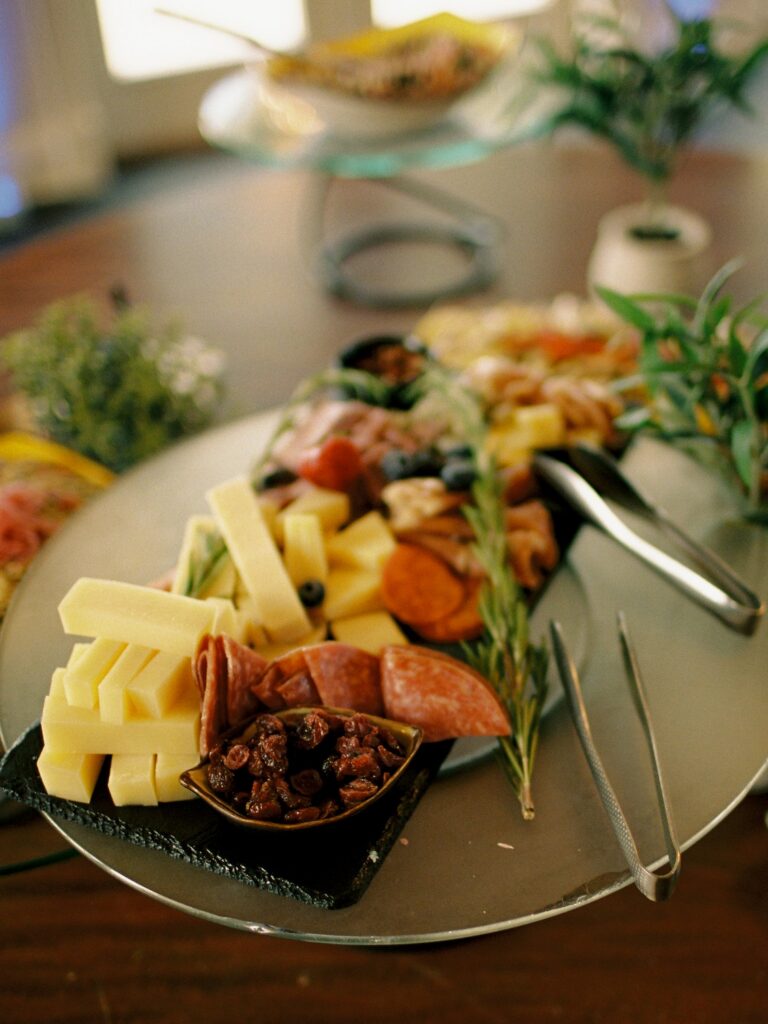
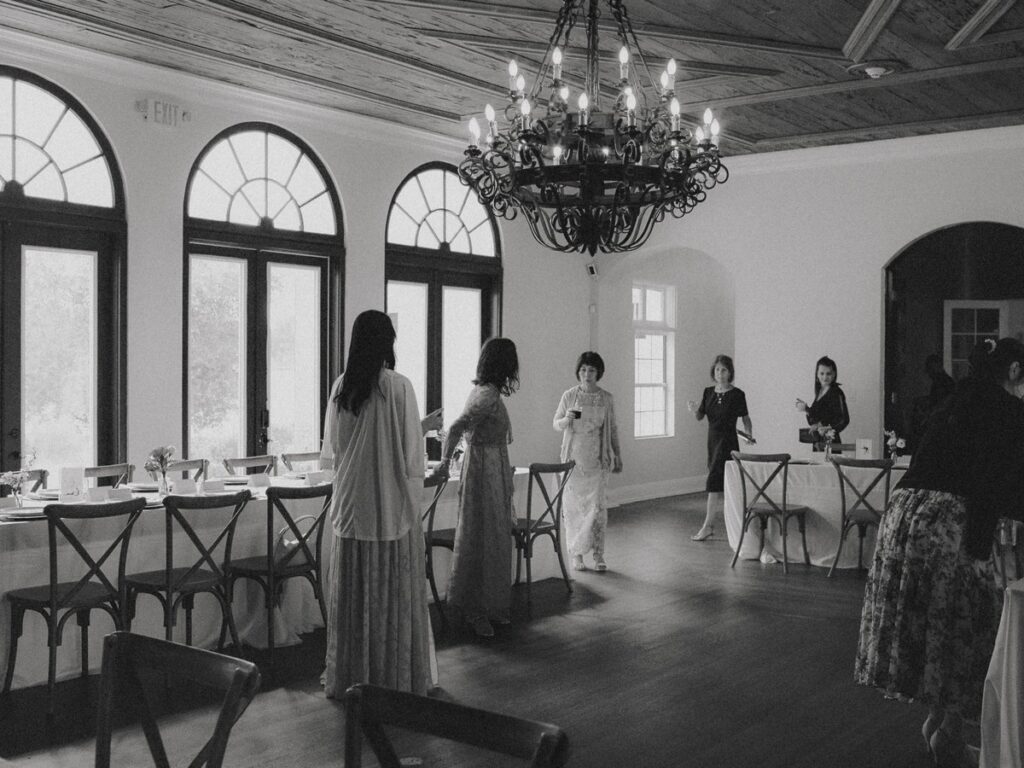
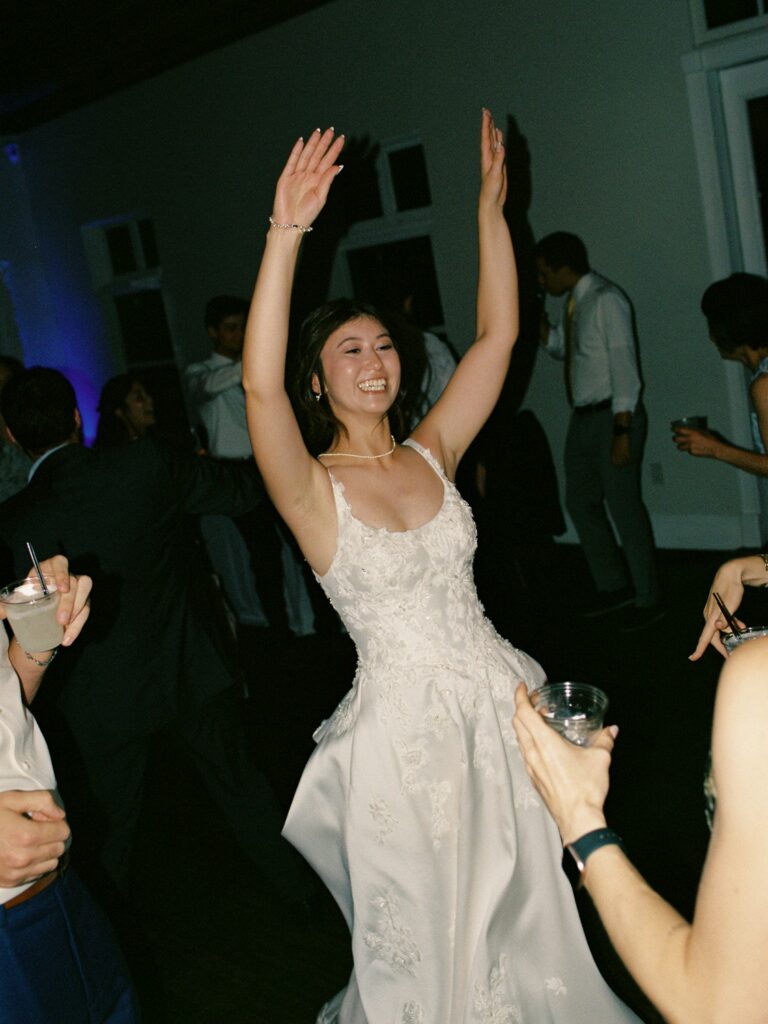
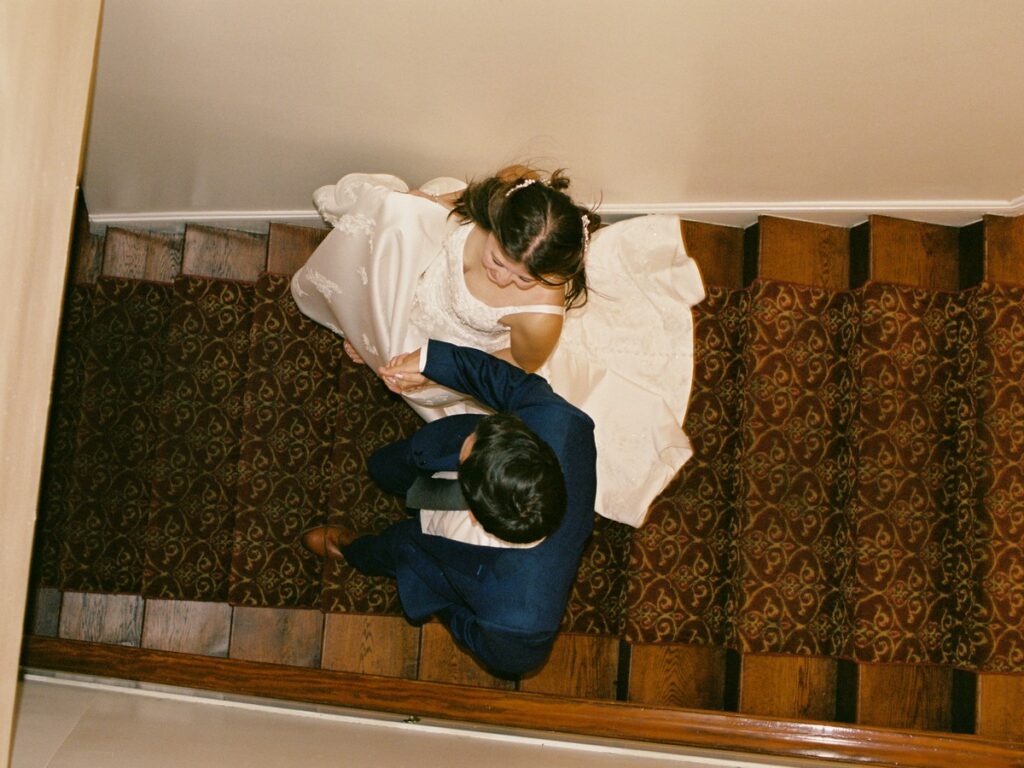
The Canon Rebel G2 is my everyday film camera. It stays with me for most of the wedding day.
Why 35mm?
35mm is the film most people picture when they think of film. It works well at weddings for a few reasons:
- It’s compact: The camera is small and light on a strap.
- It’s quick: I can lift it, take the shot, and move on.
- It’s easy to carry: I can wear it all day without getting tired.
- It has a natural view: Photos look close to what your eyes see.
- It’s great for candids: Most guests barely notice it.
Where I Use It
I reach for the Rebel G2 when moments move fast and don’t repeat:
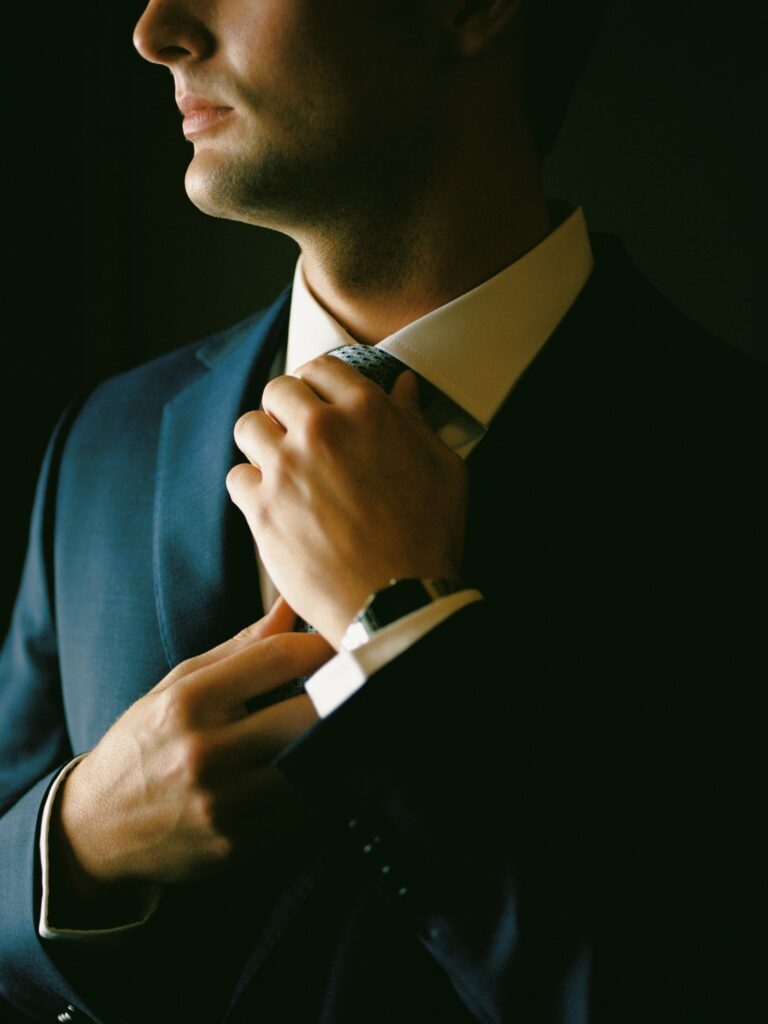
- Getting ready
- Cocktail hour
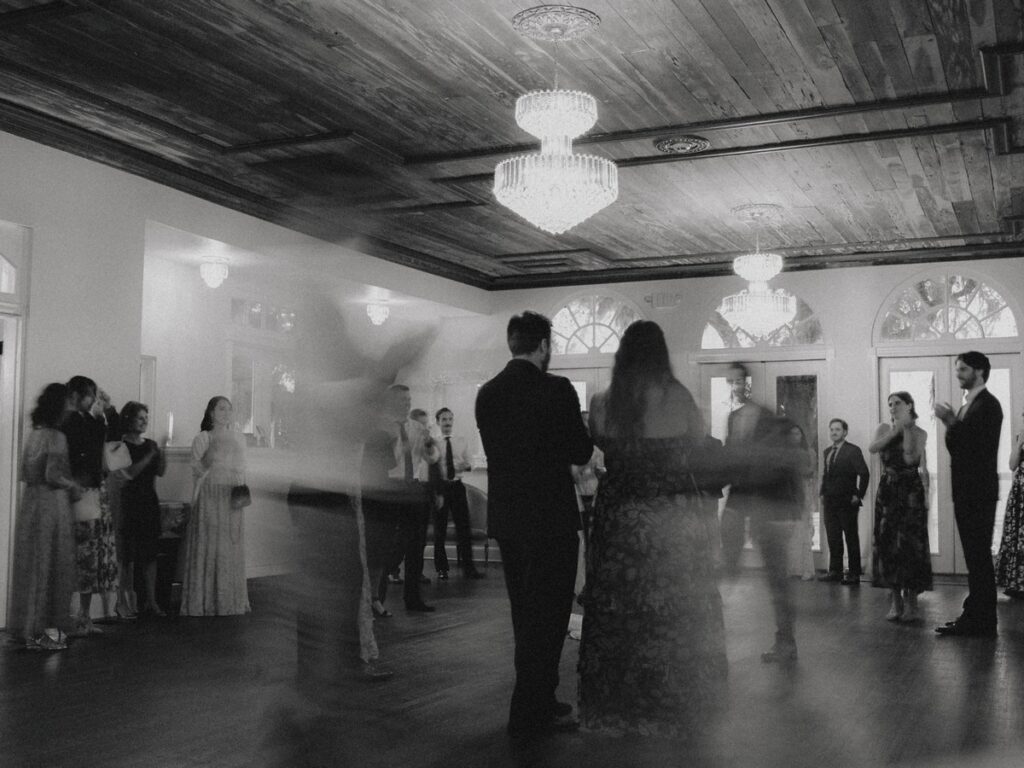
- Dancing
- Guests talking and laughing
- Little in-between moments
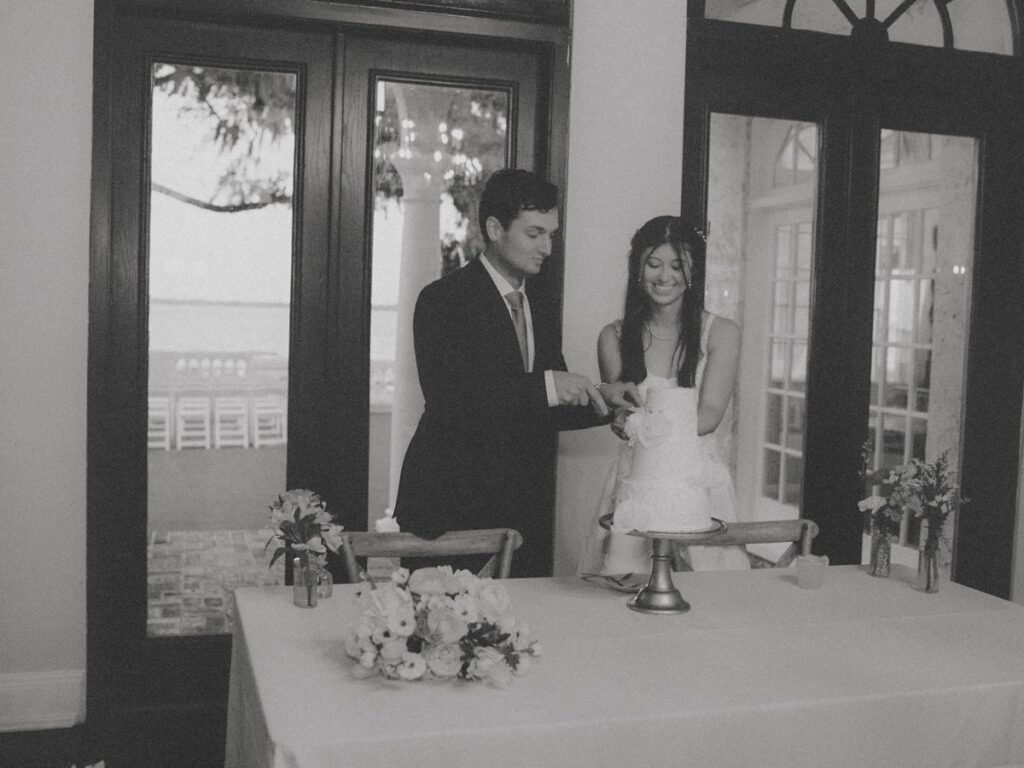
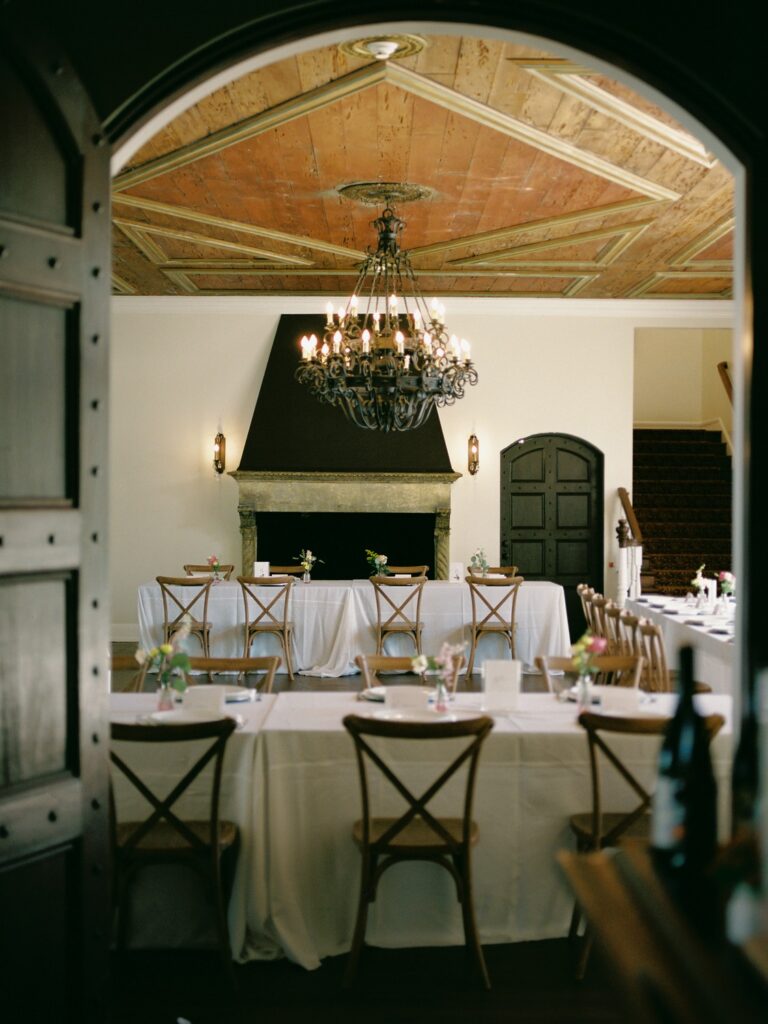
- Reception details
Why 35mm Fits Documentary Photography
Documentary photography means telling the story as it happens. I don’t direct people. I watch, wait, and take the shot when it comes.
A small camera helps with that. Guests relax when a big camera isn’t pointed at them. Then they act like themselves.
I’m not thinking about settings or gear in those moments. I’m thinking about the people in front of me.
Photographer Tip: The Rebel G2 gives me the freedom to move through the day without making the camera the center of attention.
Medium Format: My Pentax 645N
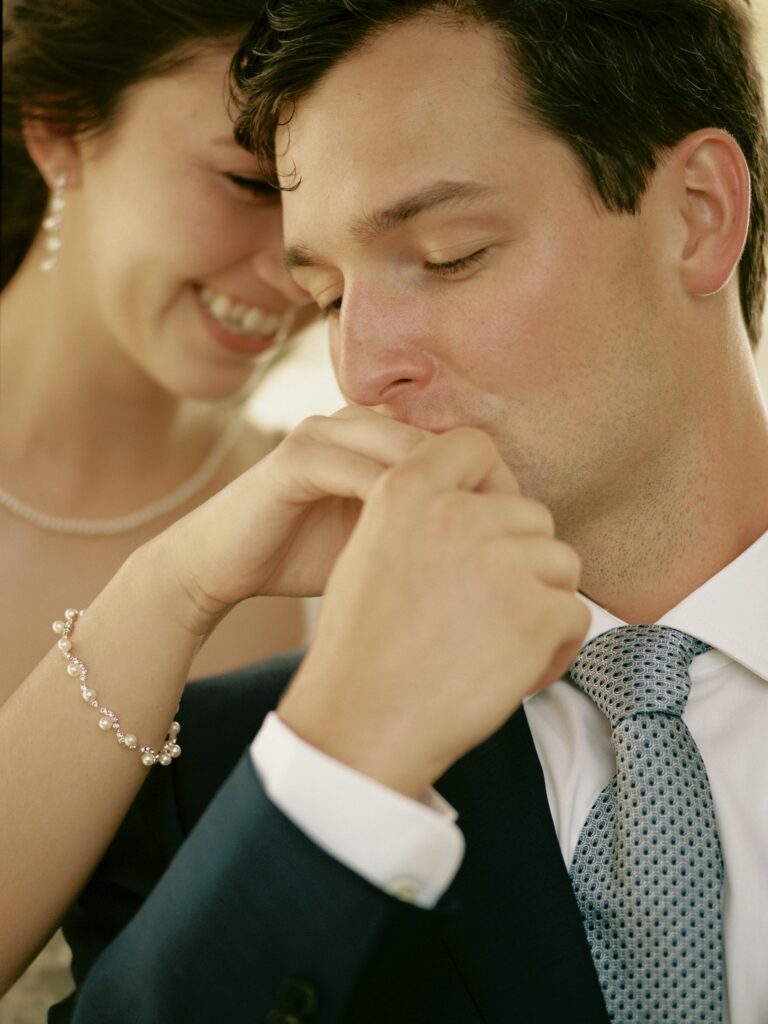
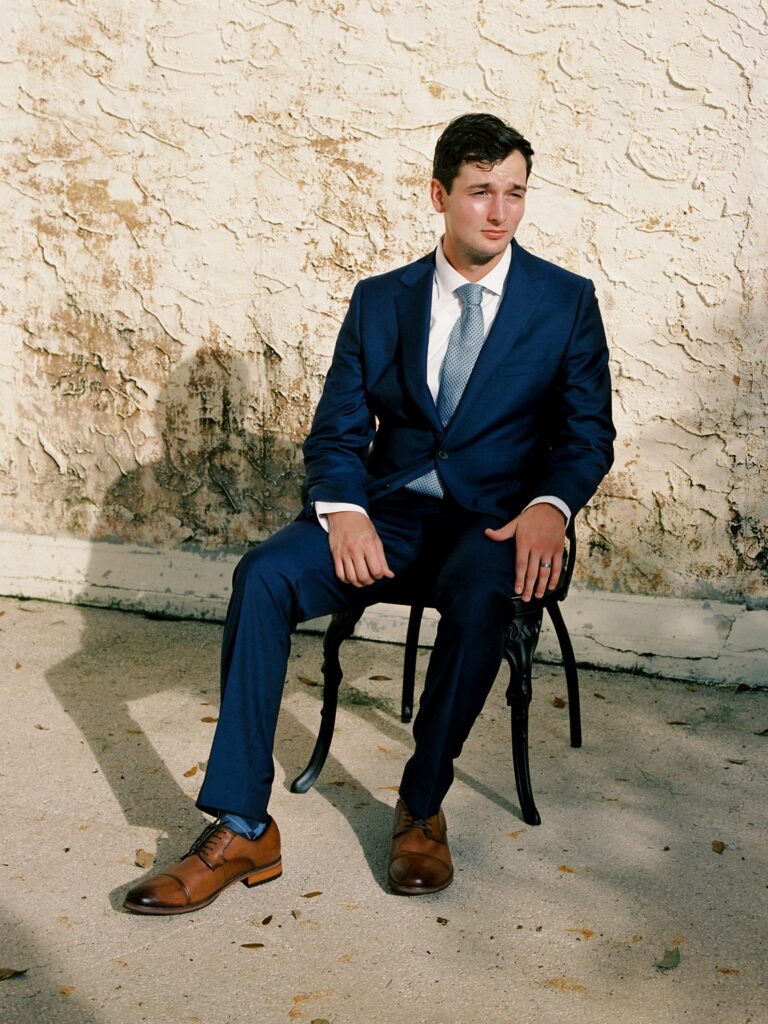
The Pentax 645N is my slower camera. I pick it up when I want to take my time.
What Makes Medium Format Different?
Medium format just means the film is bigger than 35mm. That one change affects how the photo looks.
- Larger film: The negative has more room to hold detail.
- A different look: Photos feel smooth, with soft skin tones and gentle color.
- More presence: Portraits feel calm and full, like the person is really there.
- Depth and detail: The subject stands out from the background in a natural way.
A roll of 120 film gives me about 15 frames. That is not many. So I think before I press the button.
Where It Shines at Weddings
I use the Pentax 645N when a photo deserves extra care:
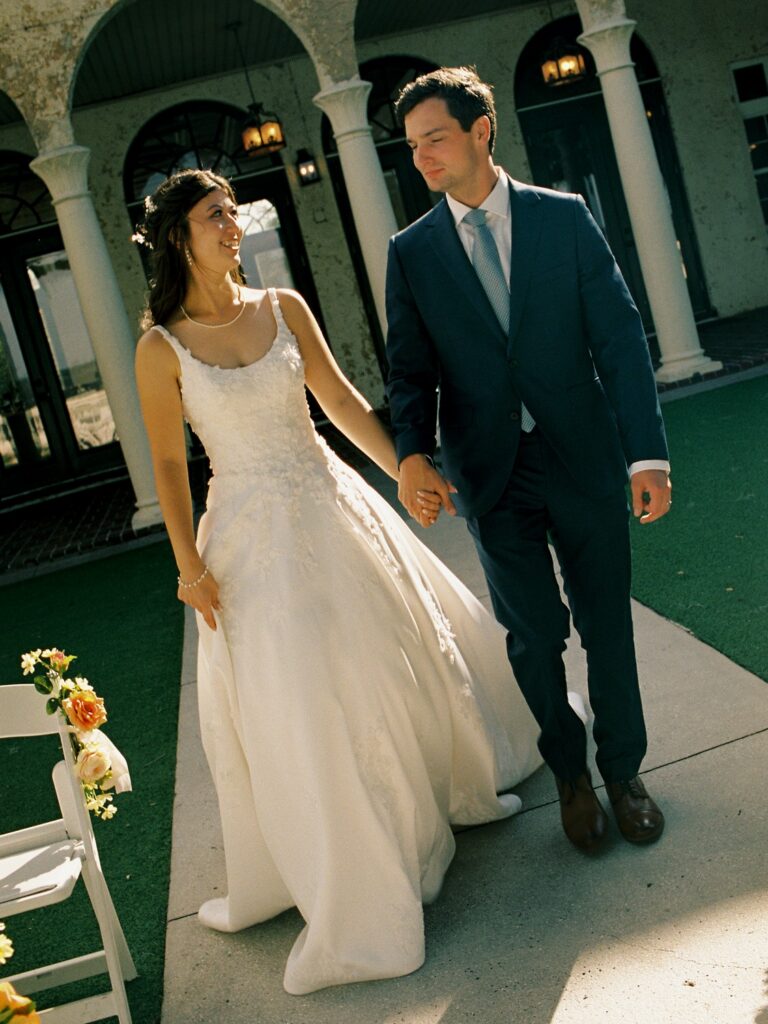
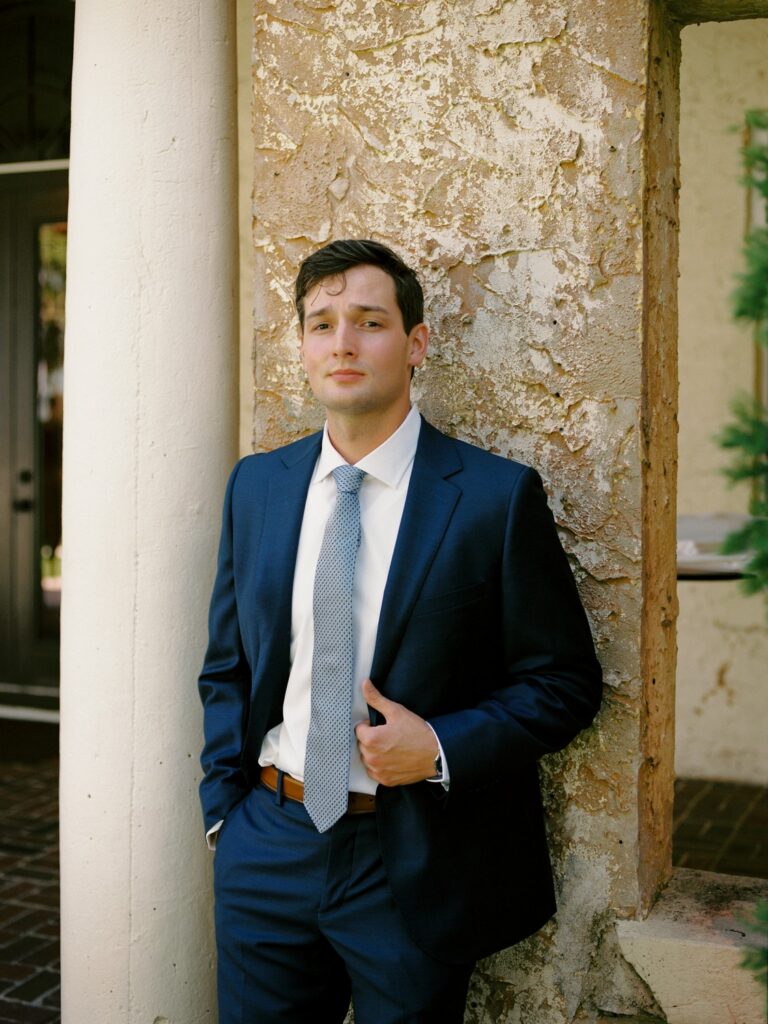
- Couple portraits
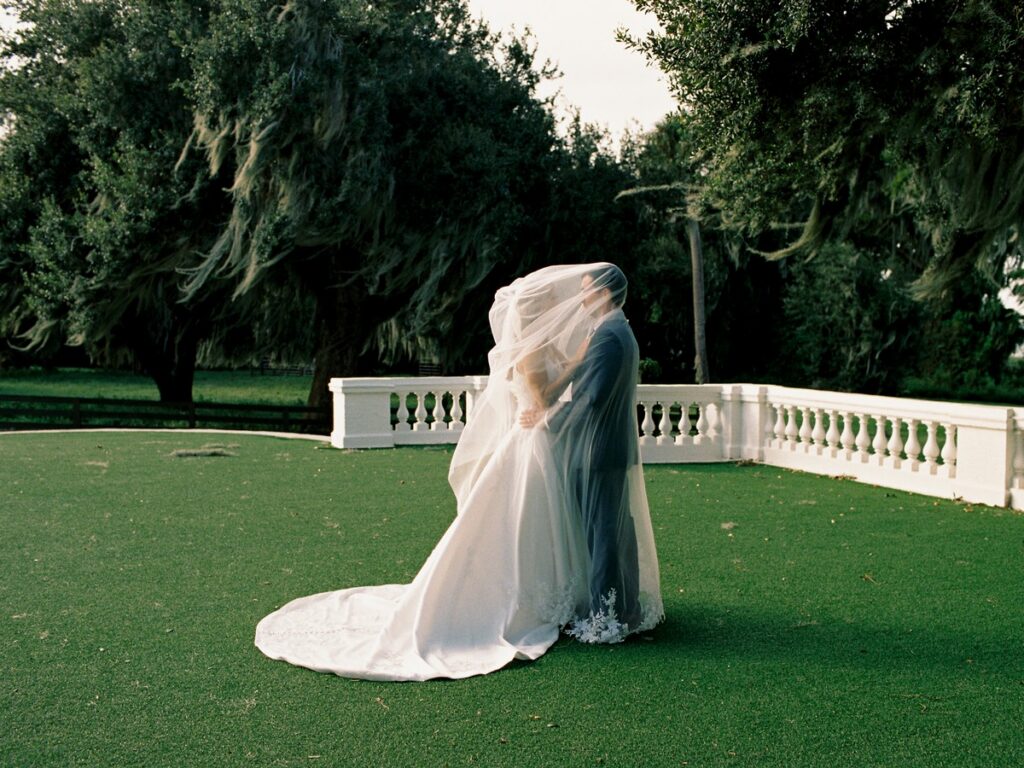
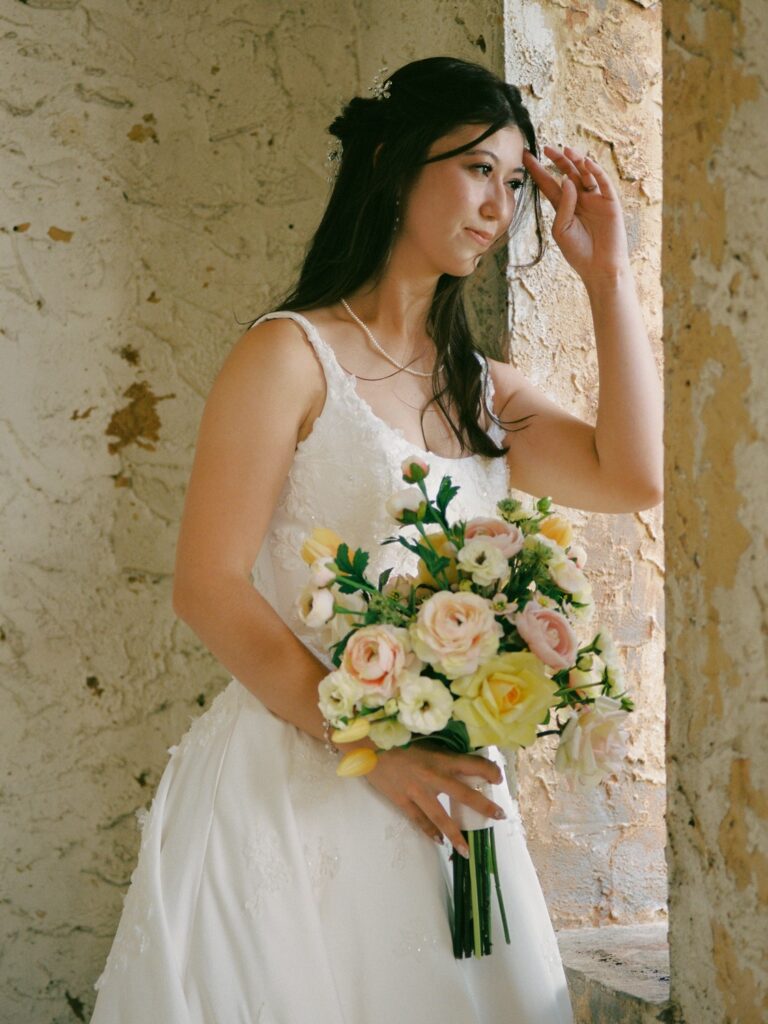
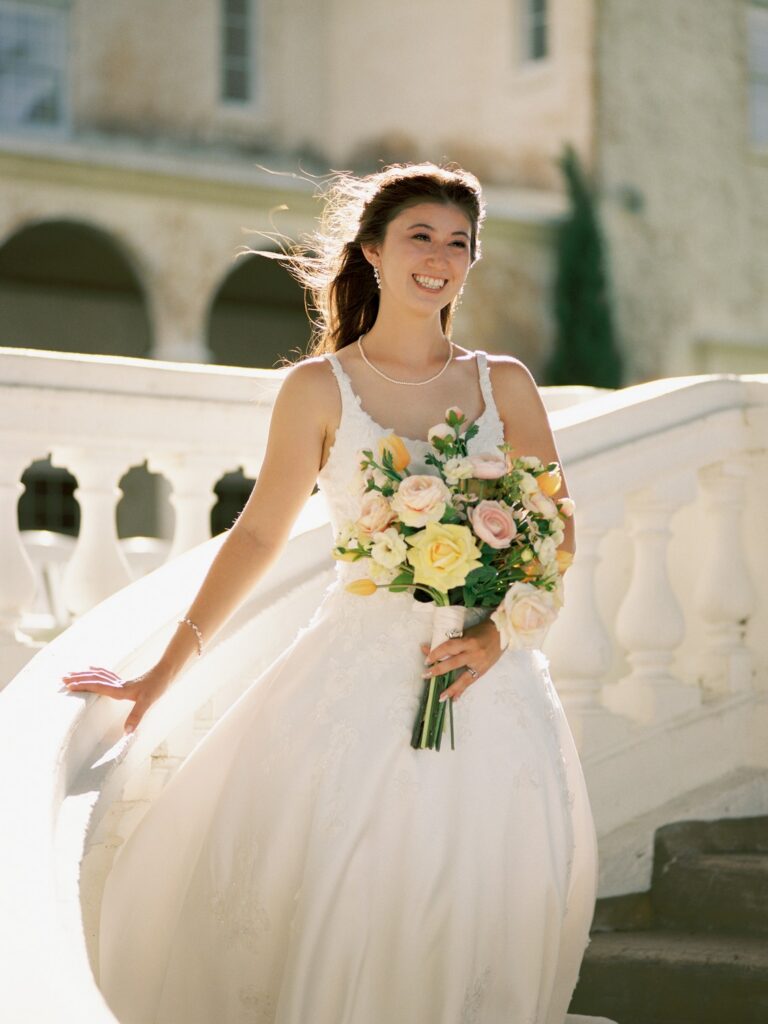
- Bridal portraits
- Family portraits
- Editorial compositions
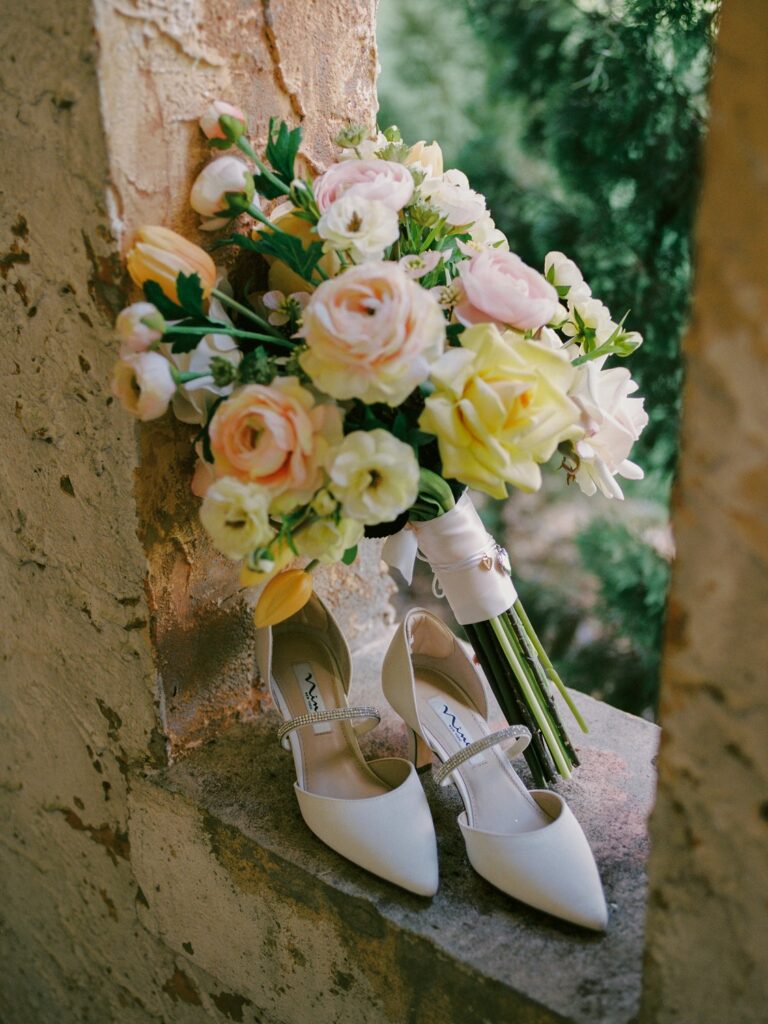
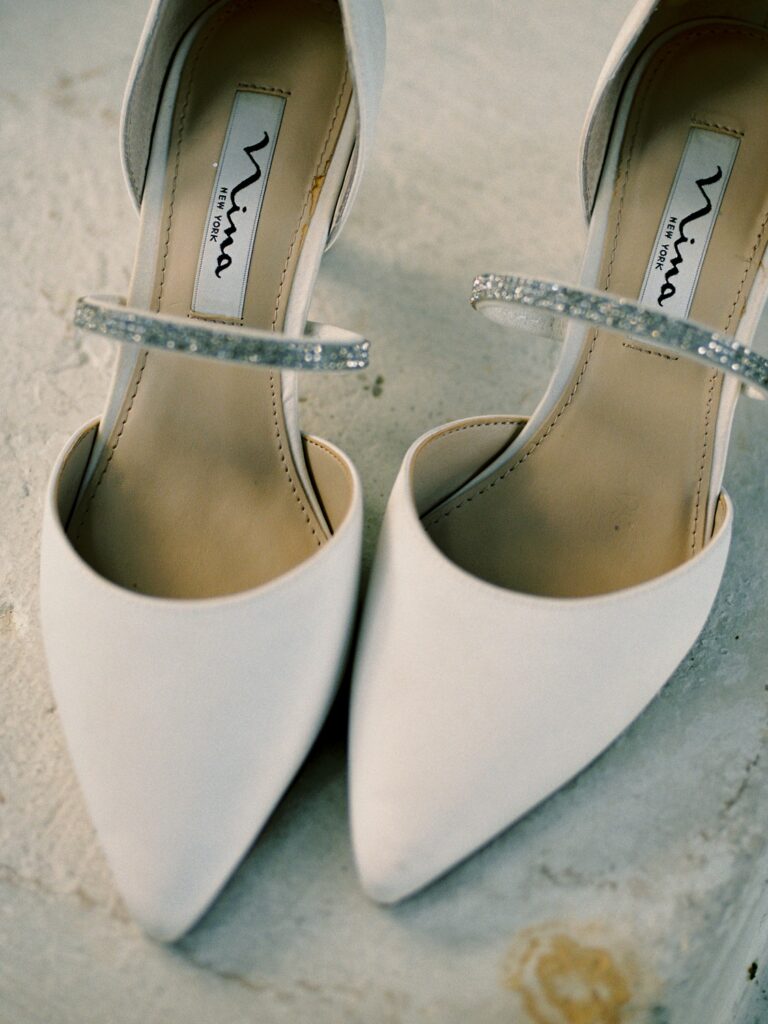
- Carefully planned detail shots, like rings, invitations, and flowers
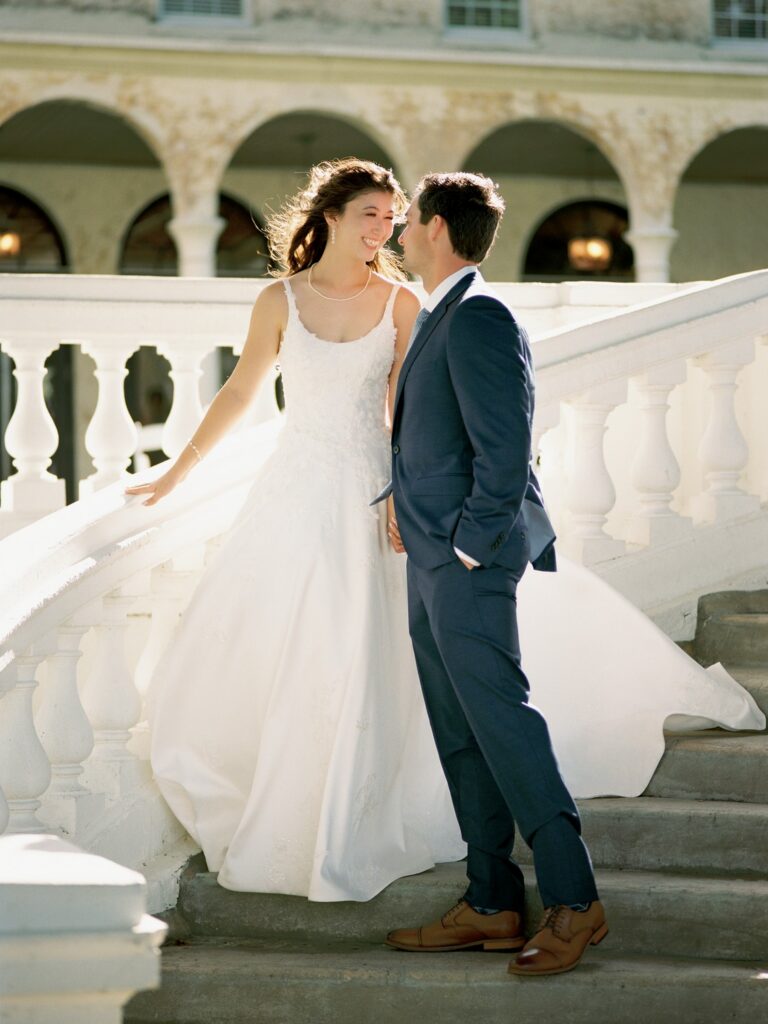
This camera fits my editorial style well. I like clean framing, good light, and a bit of direction. Medium format gives those photos a polished look. It still feels warm, not stiff.
The 35mm camera catches the day as it happens. The Pentax helps me slow down and shape a few key frames.
Photographer Tip: When I pick up the Pentax 645N, I’m usually looking for a frame that deserves a little more intention.

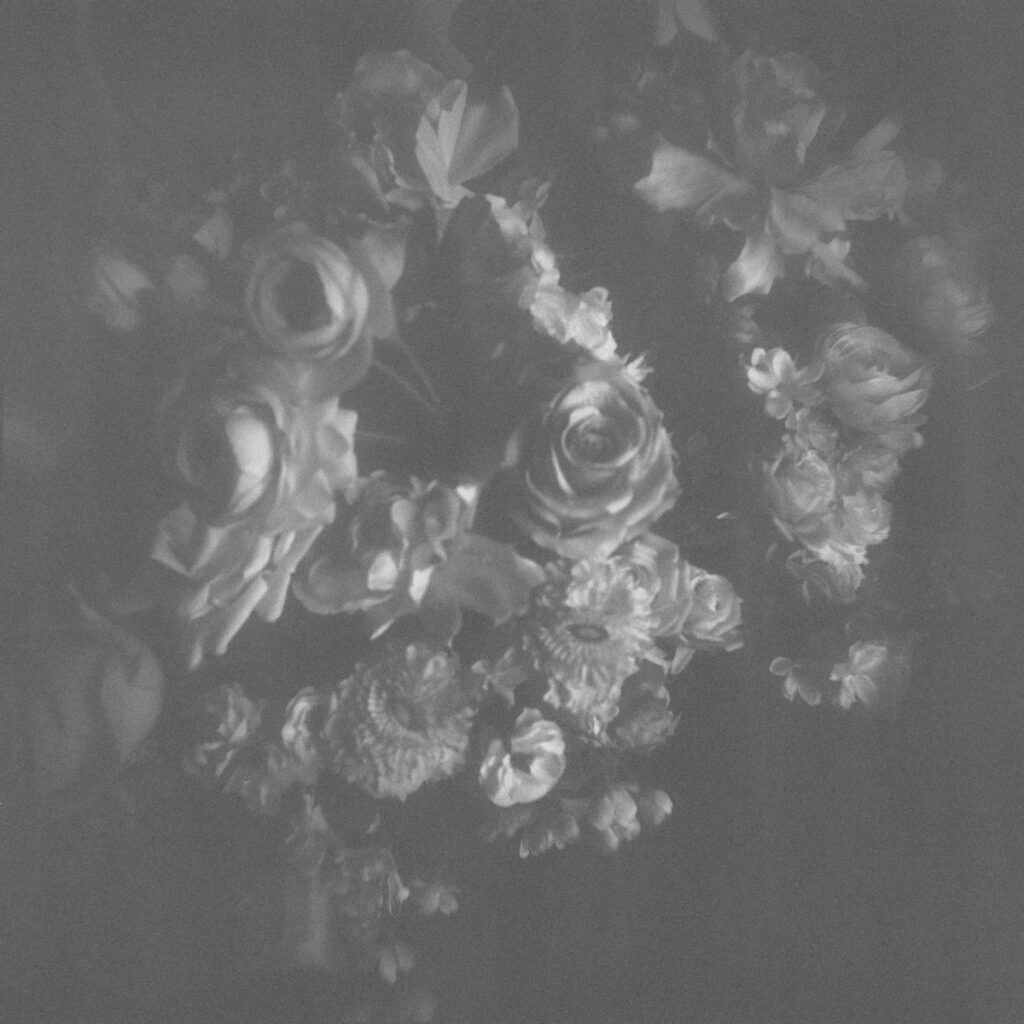
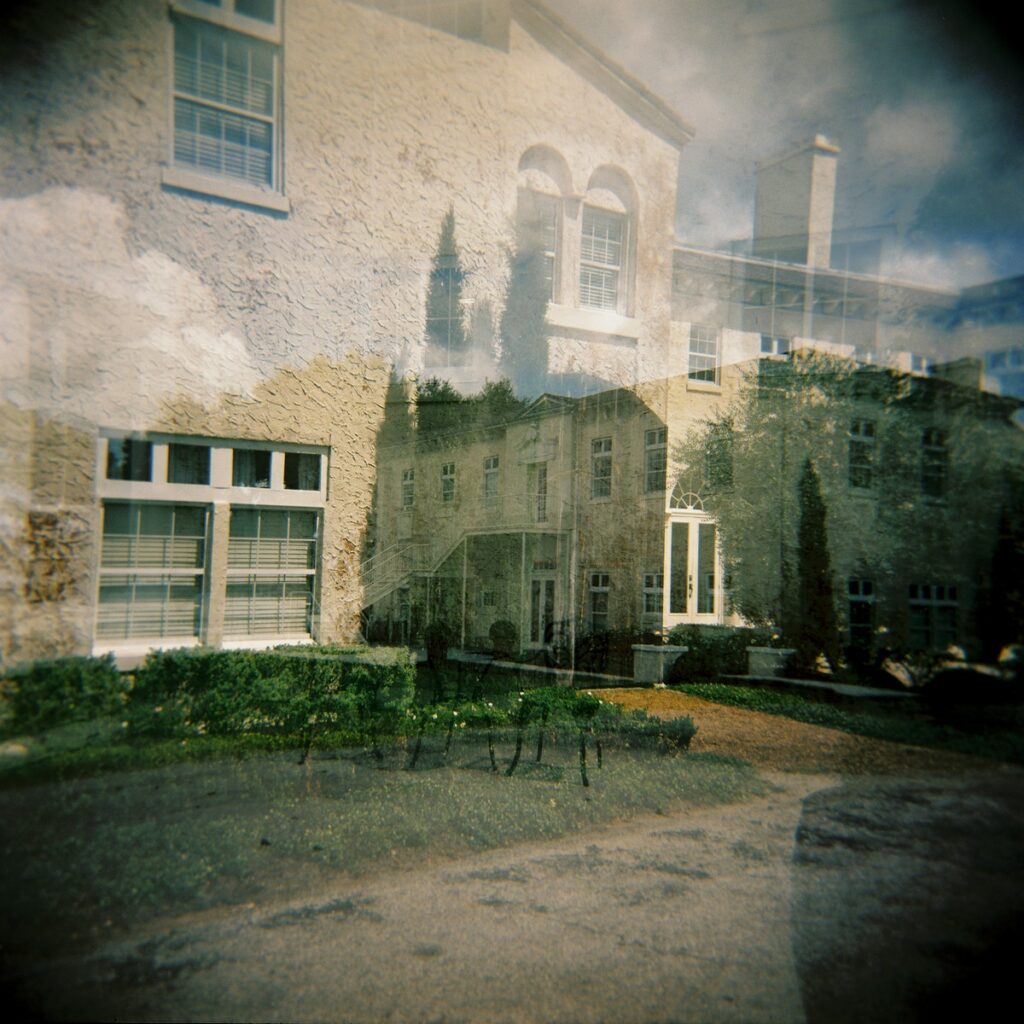
The Wild Card: My Holga 120
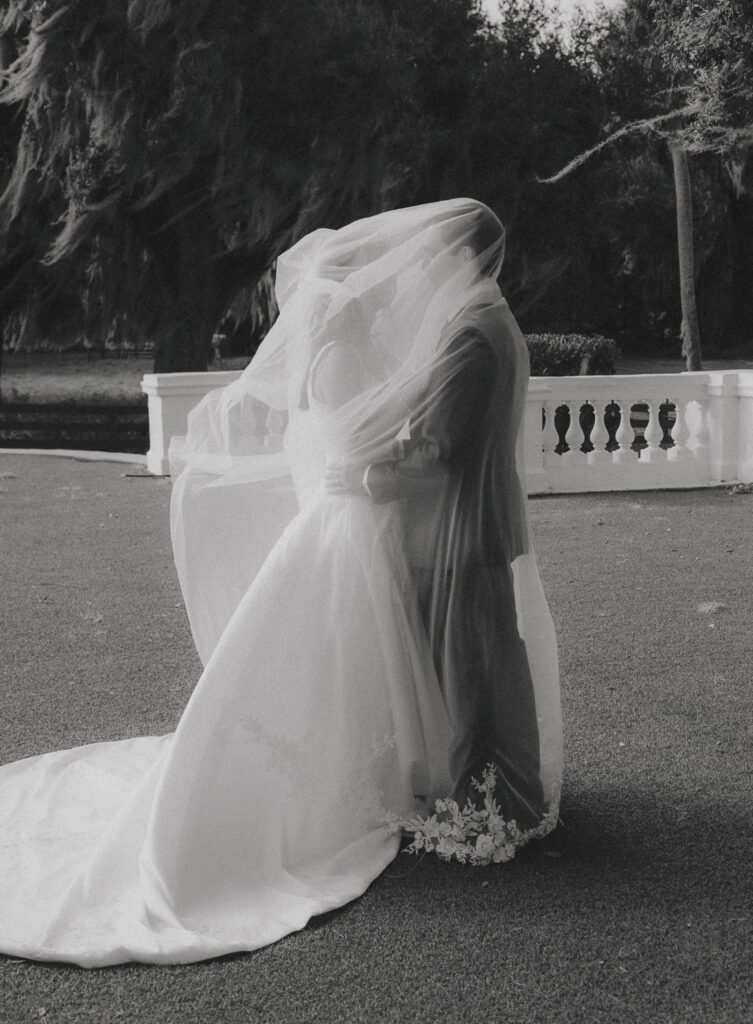
The Holga is the most playful camera in my bag. I never know exactly what I’ll get.
What Is a Holga?
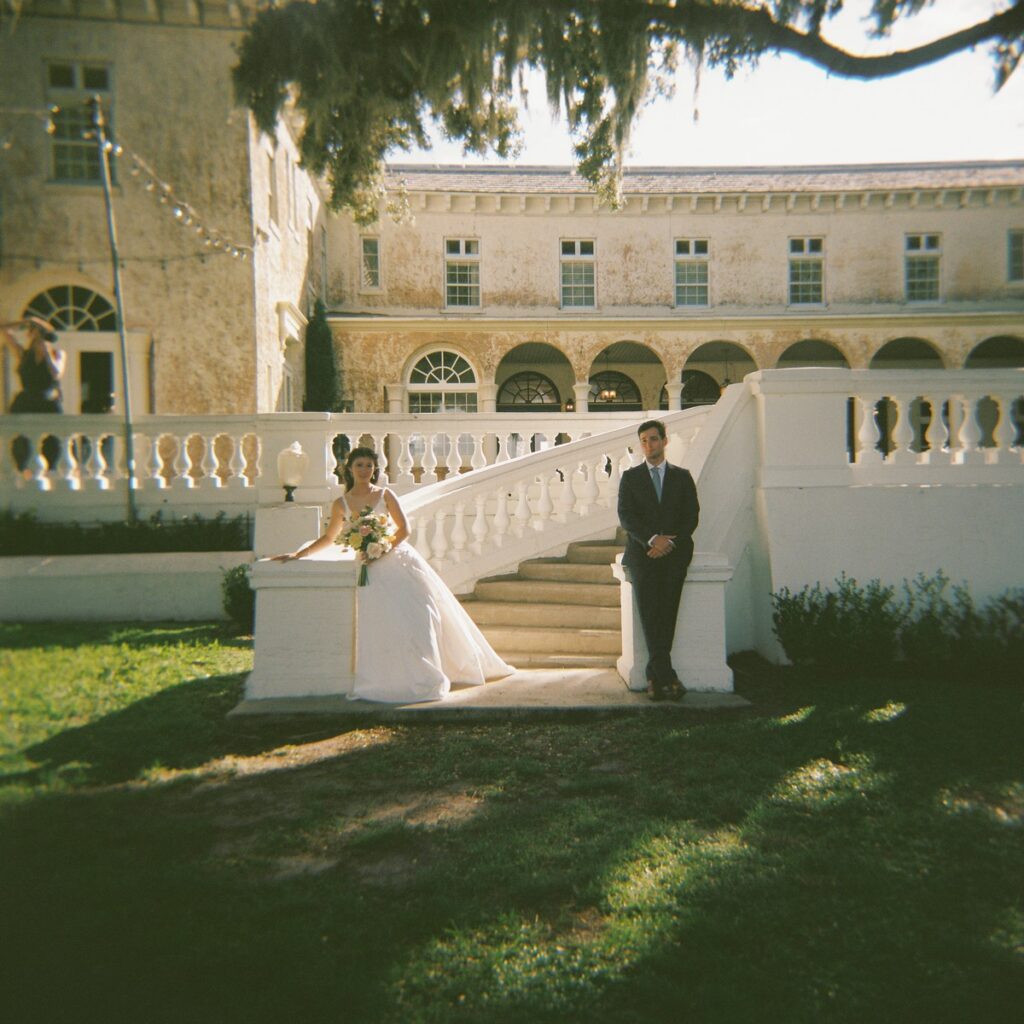
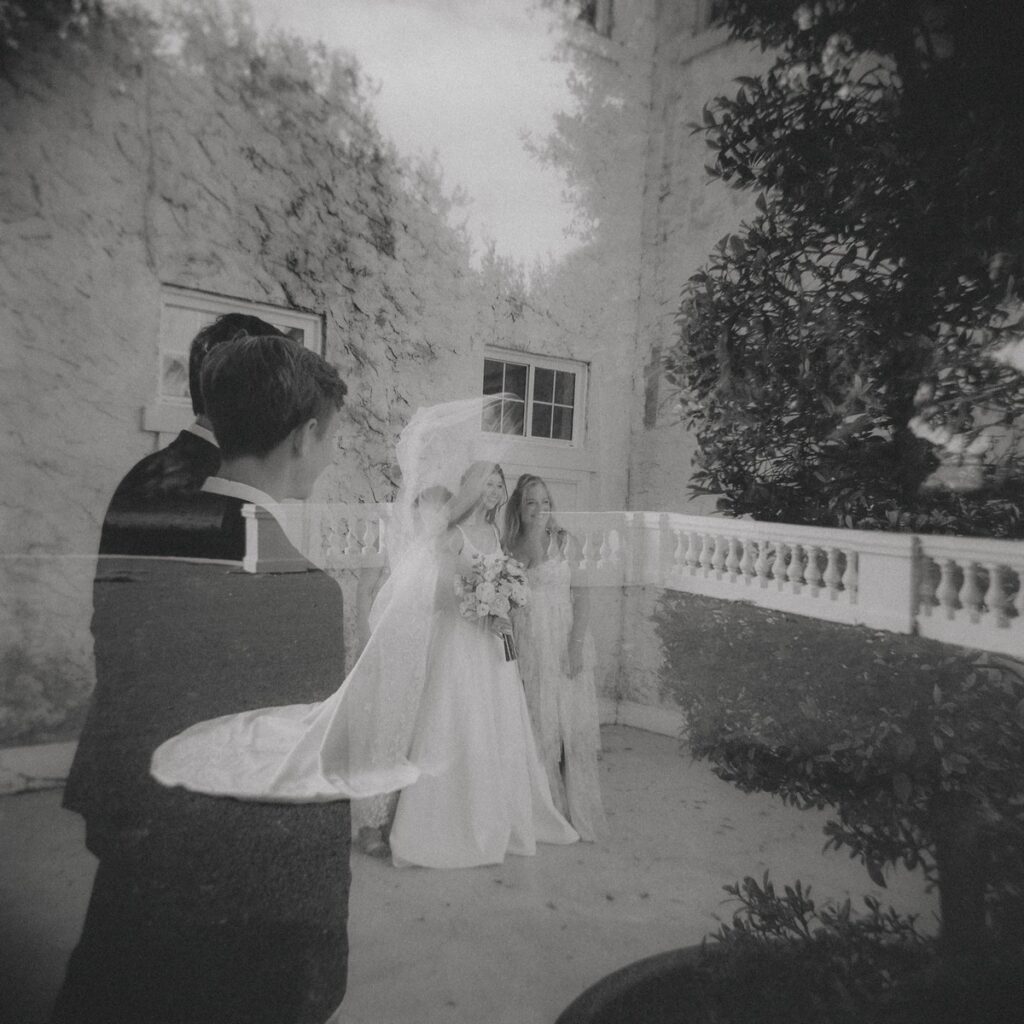
A Holga is a simple medium format film camera. The body is plastic, and so is the lens.
It has almost no controls. You set a rough focus, aim, and press the button. That’s about it.
Because it is so basic, every frame turns out a little wild. Here is what shows up:
- Light leaks: Streaks of orange or red where light sneaks into the camera.
- Dark corners: The edges of the photo fade to black. This is called vignetting.
- Soft focus: Parts of the frame look hazy and blurred.
- Surprises: Some frames come out looking nothing like what I planned.
Why Would a Wedding Photographer Use One?
Sometimes the flaws are the point. Most of my photos are sharp and planned. The Holga gives me a break from that.
I like it for:
- Dreamy, soft images
- Unexpected framing
- Light leaks that add color
- Quick test shots with no pressure
Not every frame works. Some come out too dark or too blurry. I skip those and keep the good ones.
Some rolls only give me one great frame. I’ll take it.
I never count on the Holga for must-have moments. My digital camera and other film cameras cover those. The Holga is a bonus, and it adds some personality to the gallery.
Photographer Tip: The Holga is a good reminder that not every photograph needs to be perfectly controlled.
Why Shooting Film Changes the Way I Photograph
This is the biggest thing film has given me. It changed how I work, even when I pick up a digital camera.
Film Encourages You to Slow Down
With digital, I can take 30 versions of the same shot. With film, I can’t.
Each roll has a set number of frames. Every press of the button counts. So I stop and decide if the moment is worth a frame.
That pause makes a big difference. I stop rushing and start paying closer attention to the people in front of me.
It Makes You Watch First
I follow the same steps each time:
- Observe: Watch what is happening in the room.
- Anticipate: Guess what is about to happen next.
- Compose: Pick where to stand and how to frame it.
- Make the frame: Press the button once.
- Move on: Look for the next moment.
The first two steps take the longest. A groom wipes his eyes. A dad leans in to whisper something. If I wait a few seconds, the best part usually comes.
It Makes Small Moments More Valuable
With film, I stop photographing everything. I look for photos that actually mean something.
Here are a few I watch for:
- A grandmother fixing a bow tie
- Two friends laughing at the same joke
- A flower girl fast asleep on a chair
- A mom reading a note from her daughter
These moments are quiet and easy to miss. They are also the ones couples love most later.
This fits my documentary approach. I’m not there to stage a wedding. I’m there to notice what matters and record it honestly.
Digital gets better too. I shoot fewer frames now, and more of them are keepers.
Photographer Insight: Film has taught me that sometimes the best thing a photographer can do is wait.
What Film Adds to Your Wedding Gallery
Couples often ask what they actually get when film is part of the day. The short answer is more range and more feeling.
What Film Can Add
- A mix of looks: Some frames are soft and dreamy. Others are rich and clean.
- Nostalgia: Photos that look like they came from a family album.
- Texture: Grain and soft edges give each frame some depth.
- Imperfection: Small flaws that make a moment feel real.
- Editorial character: Polished portraits with a magazine look.
- A physical feel: Film looks great in prints and albums.
- Another layer to the story: A different way to see the same day.
You won’t see all of these in every frame. But over a full gallery, the difference adds up.
It Doesn’t Replace Your Digital Gallery
Film is an add-on. It does not take the place of digital.
Your digital photos tell the complete story. They cover the ceremony, the toasts, the dinner, and every guest. Nothing gets left out.
Your film photos add another layer. They pick out certain moments and give them a different feel.
Most couples end up with a solid base of digital photos and a set of film frames that stand out. You get the full day, plus a few images that feel extra special.
When Film Photographs Become More Valuable
The wedding day is only the start. A photo can mean more as the years go by.
Years Later
Picture a photo of your grandmother laughing. On the wedding day, you may barely notice it. Twenty years later, you may look at it every week.
Photos change meaning over time. Here are some that often become favorites:
- Your grandmother laughing at the table
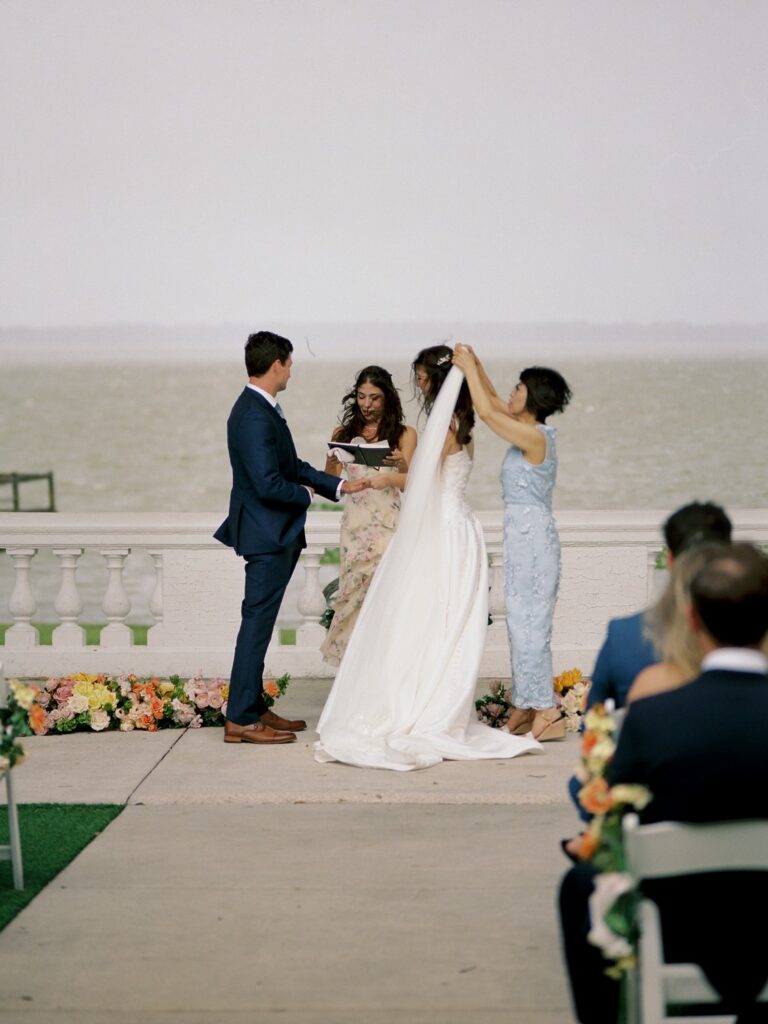
- Your dad fixing your veil
- Your partner looking at you during the vows
- Your friends dancing in a big circle
- Your parents holding hands during the ceremony
Some of these people may not be around in 10, 20, or 40 years. The photo will still be there.
That is why I look for small, quiet moments. Nobody plans them, and they are easy to miss.
Film as Part of Your Family History
Film has a look that already feels at home in a family album. Years from now, it won’t seem dated. It will feel like part of your story.
Prints help too. A photo on a screen gets buried under thousands of others. A printed photo stays where you can see it.
Here are a few easy ways to keep your film photos close:
- Print your favorites and put them in an album
- Frame one or two for your home
- Give prints to parents and grandparents
- Save a few for your kids to find one day
Kids love flipping through old photos. Someday, yours might.
Photographer Tip: The photograph you barely notice today might be the photograph you can’t imagine losing twenty years from now.
How I Incorporate Film Into a Modern Wedding
I don’t shoot the whole day on film. That would leave gaps, and most couples don’t need it.
Film Is Intentional, Not Constant
I look for moments where film adds something. A quiet portrait. A busy dance floor. A grandmother’s hands holding a bouquet.
When the moment fits, I pick up a film camera. When it doesn’t, I stay with digital. Each camera gets used where it works best.
A Typical Approach
- 35mm: Used for parts of the day, like getting ready, cocktail hour, and dancing.
- Medium format: Used for portraits and planned compositions.
- Holga: Used when a creative chance shows up.
- Digital: Used all day for full coverage.
The mix changes from wedding to wedding. A garden ceremony with soft light may get more film. A dark ballroom may get more digital.
The Result
Your gallery feels complete, planned, editorial, and documentary. You get the whole story, plus a set of frames with extra feeling.
If this sounds like what you want, we can talk about how it fits your day. I’m happy to build a plan around what matters to you.
Photographer’s Tips: How Couples Can Make the Most of Film Photography
- Don’t force a “film look.” Let moments happen naturally.
- Pick meaningful places with good natural light. Film loves it.
- Give your photographer time for portraits. A few extra minutes helps a lot.
- Include heirlooms and personal details. These become favorites later.
- Don’t worry about perfect photos. Honest frames often beat polished ones.
- Print your favorite film photos. They look best on paper.
- Ask how your photographer uses film. Film coverage is not the same everywhere.
- Bring up film early. If it matters to you, talk about it well before the wedding.
FAQ: Film Wedding Photography
What is film wedding photography?
It means shooting a wedding with photographic film instead of a digital sensor. The film is developed later. Then it is scanned or printed.
Is film photography better than digital photography?
Neither one is better. Each has its own look and its own strengths. At a wedding, they work well together.
Why do wedding photographers shoot film?
Some love the look. Others like the limited frames and slower pace. Film pushes you to shoot with more care.
Is film photography more expensive for a wedding?
It can be. You pay for rolls, processing, and scanning. It also takes more time. The cost depends on how much film gets used and how the photographer builds their packages.
How many photos are on a roll of 35mm film?
Most rolls hold 24 or 36 exposures. Medium format rolls hold fewer. A roll of 120 gives me about 15 frames.
What is medium format film?
It is film that is larger than 35mm. The bigger negative holds more detail. The look is smooth and full. Many photographers use it for portraits and editorial work.
Can you combine film and digital wedding photography?
Yes. Digital covers the whole day. Film gets used for moments where its look adds something. You get full coverage and a few extra special frames.
Will my film photographs look old-fashioned?
Not usually. Film can look timeless. The final look depends on the film type, the light, the scanning, and the photographer’s style.
Should I hire a photographer who shoots both film and digital?
It’s a good fit if you love film but want complete coverage. A photographer who knows both can blend them into one story.
Final Thoughts
Film makes a photographer slow down and choose. That is where its value comes from, not its age.
That care adds another layer to wedding photography. Digital captures the full day. Film captures certain moments with a different feeling.
Together, they give you a gallery that is complete and personal. You get every part of the story, plus frames that feel like they belong in a family album.
Final Thought: Film reminds us to slow down long enough to notice what is worth remembering.
Let’s Plan Your Wedding Photography
If you love photos that feel timeless, imperfect, and full of emotion, film may be a great fit for your wedding.
I photograph weddings across Central and South Florida. I use both digital and film to build a gallery that feels complete, personal, and true to your day.
Take a look at my portfolio, or get in touch to start planning your experience.
Adrian Mata Fort Myers Wedding Photographer
(239) 895-6953
FORT MYERS | MIAMI | NAPLES | TAMPA | ORLANDO
For more info visit
https://adrianmataweddings.com/contact
For wedding planning visit


